

Why Kidney Stones Spike in Summer: What Heat Really Does to Your Kidneys
Every summer, hospitals across India see a clear rise in Kidney Stones cases. This pattern is consistent year after year, especially in hot regions like Gujarat. The reason is not just “less water.” Heat changes how your body manages fluids, minerals, and urine flow. These small internal changes create the right conditions for stones to form.
This blog explains the real mechanism behind summer kidney stones, what most people miss, and how you can reduce your risk.
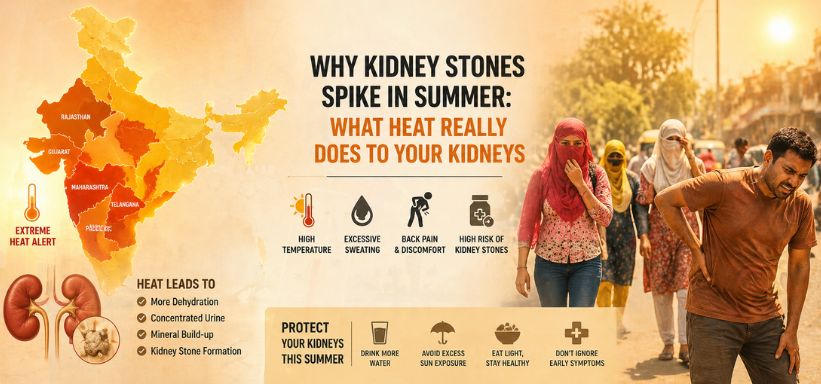
What actually changes inside your body in summer
Most people think dehydration only means feeling thirsty. The real impact is deeper.
When temperatures rise:
- Your body loses water through sweat
- Blood becomes slightly thicker due to fluid loss
- Kidneys receive less fluid to filter
This forces your kidneys to conserve water. As a result:
- Urine output decreases
- Waste concentration increases
- Mineral balance gets disturbed
This combination creates the starting point for stone formation.
Why concentrated urine is dangerous
Your kidneys remove waste through urine. When urine volume drops:
- Calcium, oxalate, and uric acid levels rise
- These substances start forming tiny crystals
- Crystals stick together and grow over time
This process is silent in the beginning. Most people do not feel anything until the stone becomes large or starts moving.
The hidden role of urine timing
One important factor most people ignore is urine frequency.
In summer:
- People avoid drinking water during work
- Urination frequency reduces
- Waste stays longer inside the kidneys
This increases the chance of crystal formation. Holding urine for long periods also worsens the risk.
Why some people get stones repeatedly
Not everyone exposed to heat develops kidney stones. The difference comes from daily habits.
High-risk patterns include:
- Drinking water only when thirsty
- Skipping water during travel or work
- High salt intake
- Frequent consumption of soft drinks
- Low intake of fresh fruits
These habits change urine chemistry and increase stone formation risk.
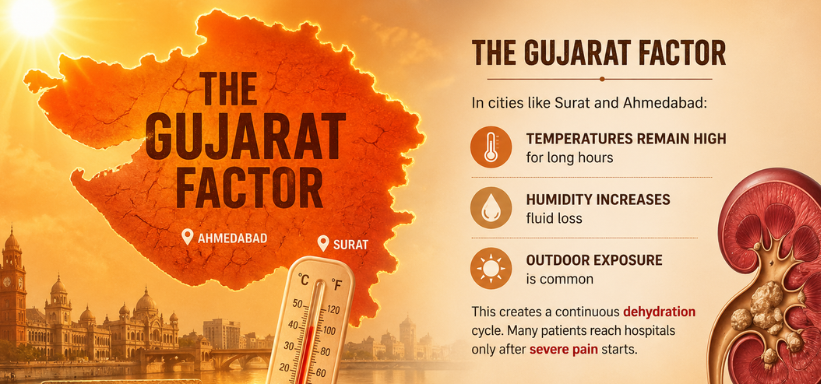
The Gujarat factor
In cities like Surat and Ahmedabad:
- Temperatures remain high for long hours
- Humidity increases fluid loss
- Outdoor exposure is common
This creates a continuous dehydration cycle. Many patients reach hospitals only after severe pain starts.
Early warning signs you should not ignore
Kidney stones usually give signals before becoming severe.
Watch for:
- Dull pain in the lower back
- Burning sensation during urination
- Frequent urge to urinate with low output
- Dark yellow urine
- Occasional nausea
Ignoring these signs allows stones to grow silently.
Why pain suddenly becomes severe
Pain starts when the stone moves into the urinary tract.
At this stage:
- The stone blocks urine flow
- Pressure builds inside the kidney
- Muscles contract to push the stone
This causes intense pain, often described as one of the most severe types of pain.
Practical steps to prevent kidney stones in summer
Maintain consistent hydration
- Do not wait for thirst
- Drink water at regular intervals
- Target 3 liters daily in hot weather
Monitor your urine color
- Light yellow or clear is ideal
- Dark yellow means dehydration
Reduce salt intake
- Limit processed and packaged food
- Avoid adding extra salt to meals
Avoid replacing water with soft drinks
- Sugary beverages increase stone risk
- They do not hydrate effectively
Add water-rich foods
- Include fruits like watermelon and cucumber
- These help maintain fluid balance
Do not ignore the urge to urinate
- Frequent urination helps flush minerals
- Holding urine increases risk
When to consult a specialist
You should seek medical care if you experience:
- Sharp or persistent back pain
- Blood in urine
- Difficulty passing urine
- Fever with urinary symptoms
Early diagnosis can prevent complications and reduce the need for surgical treatment.
Advanced kidney care in Surat
At Dhameliya Kidney Hospital & Lithotripsy Centre, we see a significant increase in Kidney Stones cases during summer months.
Under the guidance of Dr. Arvind B. Dhameliya, our approach focuses on:
- Early detection using advanced diagnostics
- Laser-based kidney stone treatment
- Minimally invasive procedures
- Complete urology care under one roof
Timely treatment helps patients recover faster and reduces the risk of recurrence.
Final takeaway
Small changes in your daily routine can reduce your risk significantly. Staying well hydrated, eating a balanced diet, and paying attention to early symptoms help you avoid serious complications.
Do not wait for pain to take action. Early prevention and timely care make treatment easier and more effective.





2 Comments
Sam
May 12, 2026, at 6:48 amGood Information, We all need to know more about our body health. It’s for our safety.
Thank you.
dhameliyahospital@gmail.com
May 27, 2026, at 4:59 amThank you for your valuable feedback and support.
We are happy to know that you found the information helpful.
At Dhameliya Kidney Hospital & Lithotripsy Centre, we always try to spread awareness about kidney health and help people stay safe and healthy during every season.
Stay healthy and take care.